What Skills Should Every Student Learn Before Leaving School?
For years, we have asked students one question:
“What did you score?”
Perhaps it is time we asked a few more.
Can you speak for yourself?
Can you solve a problem when nobody gives you the answer?
Can you approach someone you have never met?
Can you handle disagreement without losing respect?
Can you take initiative when nobody tells you what to do?
Because a student is not preparing only for the next examination.
They are preparing for a world that will not always give them a question paper.
Education Gives You a Foundation. Skills Help You Use It.
Academic education remains important. It gives students knowledge, discipline and a foundation for further learning.
But knowledge becomes far more powerful when a student knows how to apply it.
A student may understand economics but struggle to explain an idea.
They may know the science behind climate change but never take initiative to do anything about it.
They may have excellent grades but hesitate when introduced to someone new.
The gap is not necessarily a lack of intelligence.
Sometimes, it is simply a lack of practical exposure.
The Skills That Follow You Beyond School
There are countless skills a young person can develop, but some become useful almost everywhere:
Communication — expressing an idea clearly.
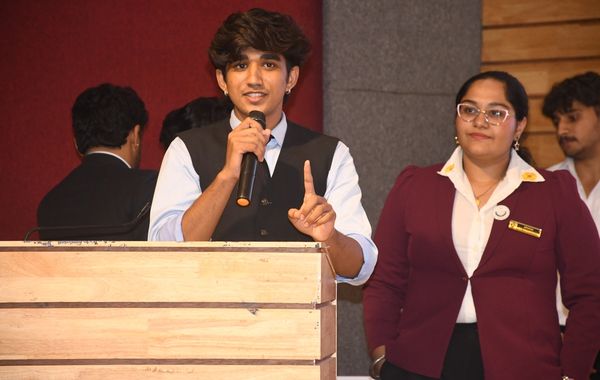
Public speaking — having the confidence to use your voice.
Critical thinking — questioning information instead of accepting everything immediately.
Problem-solving — looking for solutions instead of only identifying problems.
Research — learning how to find and understand information before forming an opinion.
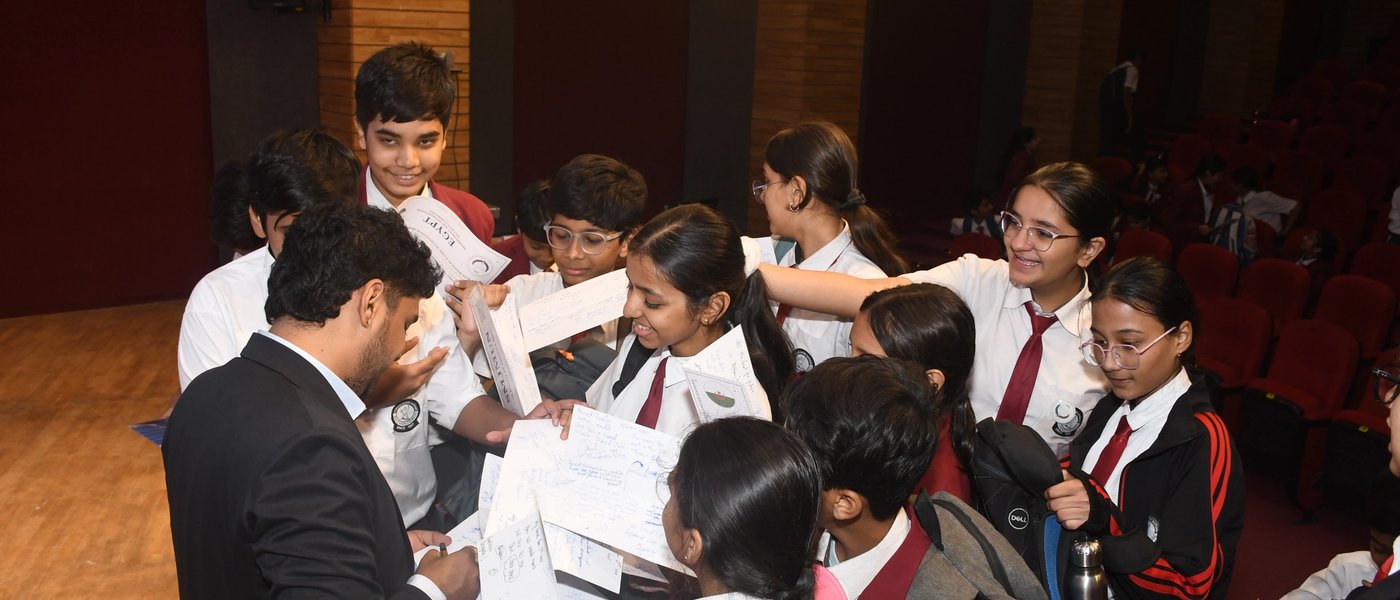
Collaboration — working with people who may not think like you.
Adaptability — remaining effective when circumstances change.
Initiative — taking the first step without waiting to be instructed.
Cultural awareness — understanding that your way of seeing the world is not the only way.
Responsibility — understanding that your actions affect people beyond yourself.
These are not merely career skills.
They are life skills.
The Future Will Reward More Than What You Know
The World Economic Forum's Future of Jobs Report 2025 identifies analytical thinking, resilience and flexibility, leadership and social influence, and creative thinking among the most important core skills employers value.
That does not mean academic education is becoming irrelevant.
It means the definition of being “prepared” is becoming broader.
A student needs knowledge.
But they also need the ability to think with that knowledge, communicate it, apply it and turn it into action.
Start Early. Build Gradually.
A student does not need to master every skill at fifteen.
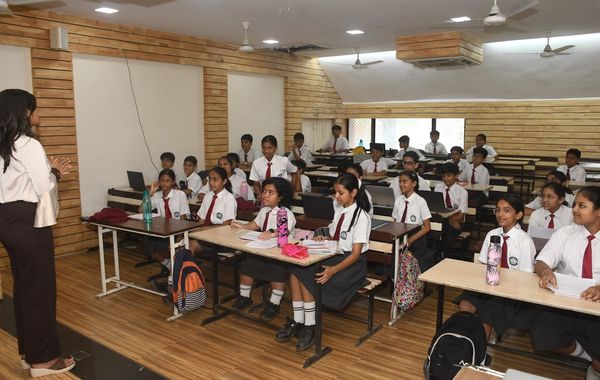
A Class 3 student may simply begin by speaking on stage.
A Class 6 student may learn how to participate in a discussion.
A Class 9 student may learn how to research and defend an opinion.
A Class 12 student may begin learning negotiation, leadership and professional communication.
The important thing is to begin.
Skills grow through repetition.
The earlier the exposure, the more natural the ability can become.
A Word From the Founder
“Education can fill a young mind with answers. But true development begins when that mind learns how to ask better questions, face unfamiliar situations and use what it knows to create something better.”
— Aarushh Sahu, Founder & President, SMJMUN
Don't Prepare Students Only to Pass
A student will eventually leave school.
The timetable will end.
The examinations will end.
The report cards will be filed away.
What remains is the person they have become.
Can they communicate?
Can they think?
Can they adapt?
Can they take responsibility?
Can they stand up for what they believe while still listening to someone who disagrees?
Can they enter an unfamiliar room and find their place in it?
That is the real test of preparation.
At SMJMUN, we believe education should not only help young people understand the world.
It should help them become capable of contributing to it.
Because the goal is not simply to create students who are ready for the next class.
It is to create young people who are ready for the next chapter of their lives.
Dare. Rise. Impact.