Public Speaking Is a Skill — Why Every Student Should Learn It
There is something strange about the way we teach children to communicate.
We teach them mathematics before asking them to solve a problem.
We teach them science before asking them to explain the world.
We teach them languages before expecting them to write.
But when it comes to speaking, we often do something completely different.
We put a microphone in their hands and say:
“Speak.”
Then, when they hesitate, we call them shy, underconfident or afraid of the stage.
Perhaps the real question is not why some students are afraid to speak.
Perhaps it is why we expect them to already know how.
Confidence Is Not a Personality. It Is a Process.
One of the biggest misconceptions students have about public speaking is that confident speakers are simply born that way.
I don't believe that.
My own MUN journey began in Class 5. In my early conferences, I did not always understand what was happening. There were times when procedures went over my head, and I found myself sitting quietly because I simply did not know how to participate.
With experience, something changed.
I learned.
I practised.
I made mistakes.
I tried again.
And eventually, speaking became less about overcoming fear and more about expressing an idea.
That is why I believe confidence often comes after participation, not before it.
Public speaking, like any other skill, develops through practice. Students need opportunities to participate, receive feedback, make mistakes and try again.
We Cannot Call a Student “Bad at Speaking” Before We Teach Them to Speak
Imagine giving someone a recipe and asking them to cook a meal for fifty people without ever allowing them into a kitchen.
They know the ingredients.
They may even remember the instructions.
But what happens when the salt is missing?
What happens when something burns?
What happens when the situation doesn't go according to the recipe?
That is when skill matters.
Public speaking is no different.
A student needs to learn how to structure an idea, use their voice, manage pressure, listen, respond to unexpected questions, recover from mistakes and communicate with someone who disagrees with them.
The stage is the kitchen. Training is learning how to cook.
And practice is what turns knowledge into ability.
Public Speaking Is Not Just About the Stage
When we hear “public speaking”, we often imagine an auditorium filled with people.
But some of the most important moments of communication happen far away from a stage.
It is introducing yourself to someone you have never met.
It is asking for help when you are travelling.
It is explaining an idea in an interview.
It is speaking to a teacher when you disagree.
It is presenting your work to a client.
It is telling someone what you believe—and being able to explain why.
Eventually, every student has to represent themselves.
You cannot hire someone else to introduce you everywhere you go.
Communication is therefore not an additional skill reserved for students who want to become speakers.
It is a foundation for almost every profession and almost every meaningful interaction.
The World Is Changing. Communication Is Not Becoming Less Important.
Technology is changing the way we study and work.
AI can generate information. Software can automate tasks. Digital tools can make technical work faster.
But the ability to think, communicate, collaborate and influence people remains deeply human.
The World Economic Forum's Future of Jobs Report 2025 identifies analytical thinking, resilience and flexibility, leadership and social influence, and creative thinking among the leading core skills employers value.
The lesson is not that students should choose skills instead of education.
It is that education becomes far more powerful when a student knows how to use what they have learned.
Knowledge gives you something to say.
Communication gives you the ability to take it into the world.
What I Have Seen Through MUN
Over the years, I have seen students enter MUN rooms who believed they could not speak.
Some were naturally quiet.
Some were afraid of making mistakes.
Some knew exactly what they wanted to say but could not find the confidence to say it.
And then, with preparation and repeated participation, many began changing.
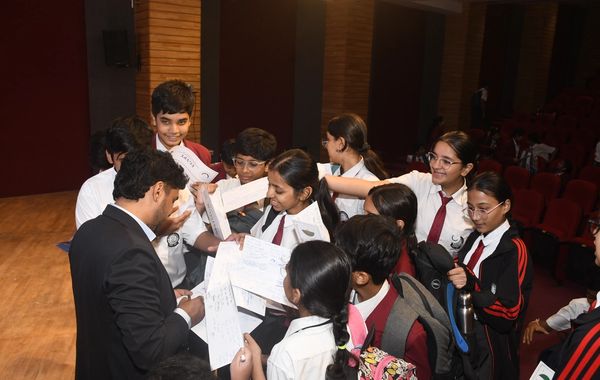
One of the most memorable moments for me came from a student at Indore Public School whose former teacher remembered him as someone who barely spoke to anyone. After the conference, his classmates were talking about how confidently he had participated.
That is the kind of result that matters to me.
Not simply:
“Did the student win?”
But:
“Did the student become better than the person who walked into the room?”
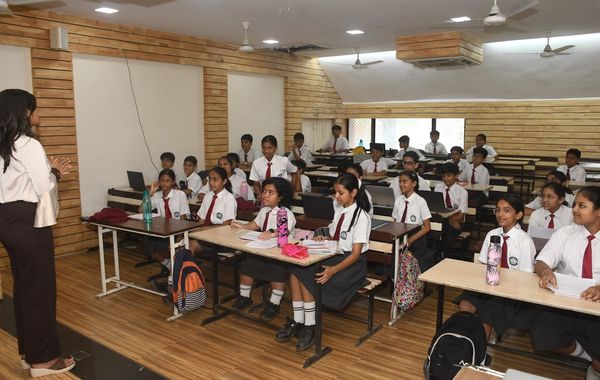
That is also why training is central to SMJMUN. Our approach is built around training, preparation, participation and leadership, rather than treating MUN as only a three-day competition.
A Word From the Founder
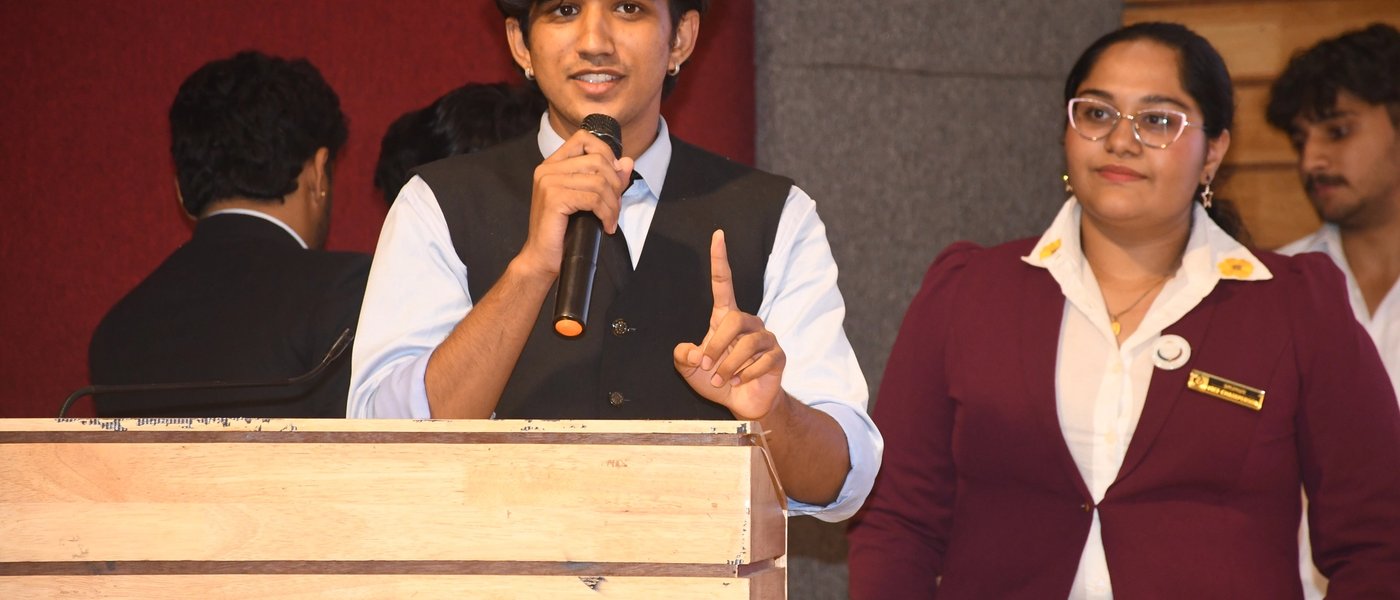
“A child's silence is not always the absence of a voice. Sometimes, it is a voice that has never been given enough courage, opportunity, or reason to be heard.”
Aarushh Sahu, Founder & President, SMJMUN.
Give Them the Opportunity Before You Judge Their Ability
A student does not need to become an extraordinary speaker overnight.
They can begin with one sentence.
Then one question.
Then one introduction.
Then one presentation.
Then one difficult conversation.
Growth rarely announces itself.
It happens quietly, through repeated attempts.
The student who is afraid to raise a hand today may become the person confidently presenting an idea ten years from now.
But that future speaker has to begin somewhere.
We should not wait for students to become confident before giving them opportunities.
We should give them opportunities so they can become confident.
Because the purpose of public speaking is not to make every student the loudest person in the room.
It is to help them become comfortable enough with their own voice to use it when it matters.
And perhaps that is the real skill:
Not speaking so that everyone hears you.
Speaking because you have something worth saying.
Dare. Rise. Impact.
Share this article